

Road safety · Pedestrian detection & actuation

Radar pedestrian crossing sensor for real-time detection

Detect presence and approach in a configured crossing zone and provide a real-time detection event to warning lights, beacons, signals or an external traffic controller. No cameras and no road-embedded detectors.

No image or video capture

For ITS integrators, traffic-signal manufacturers, road authorities and traffic engineering firms.

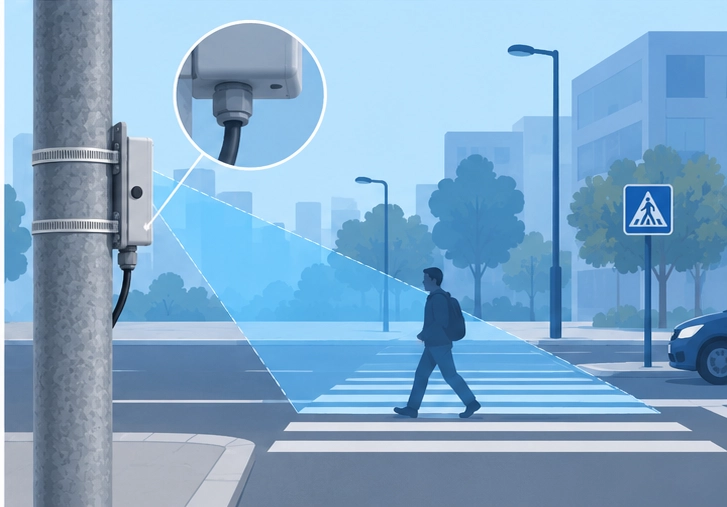
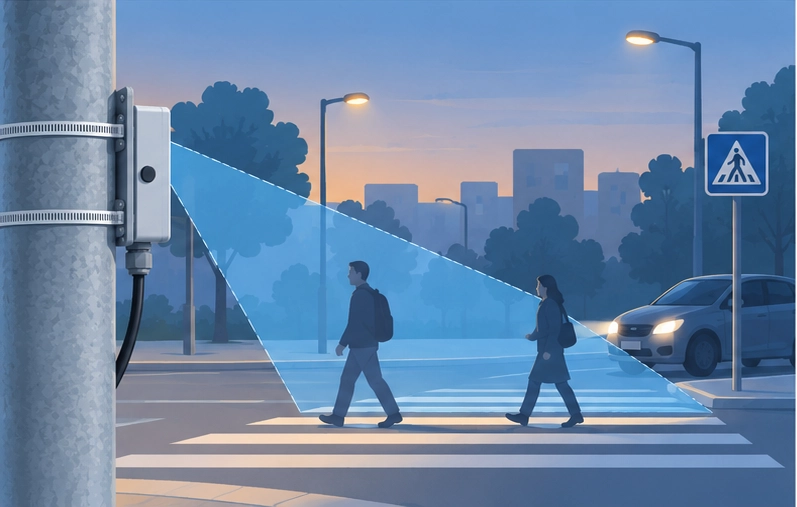
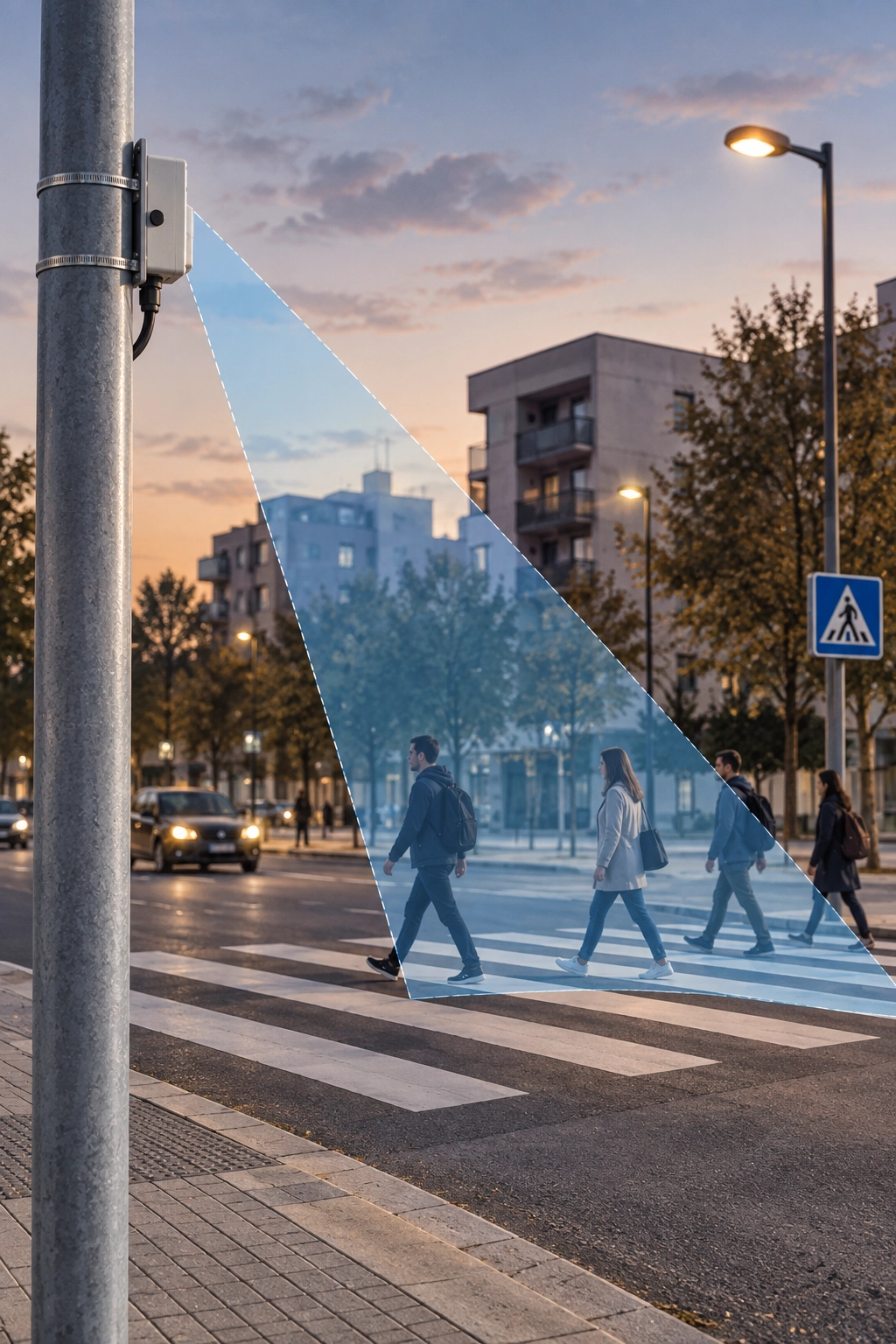
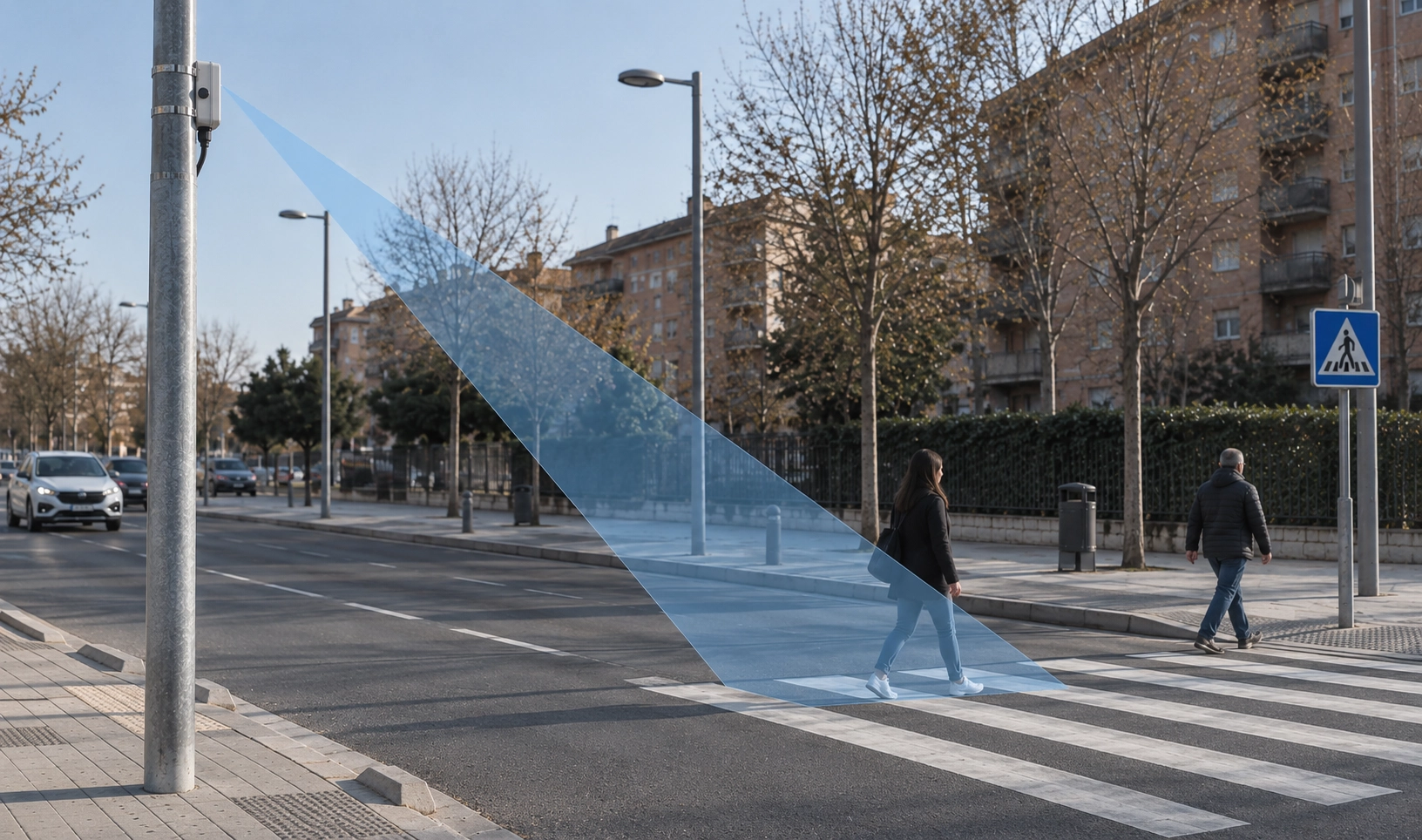
Radar detecting a pedestrian approaching a crosswalk Demonstration
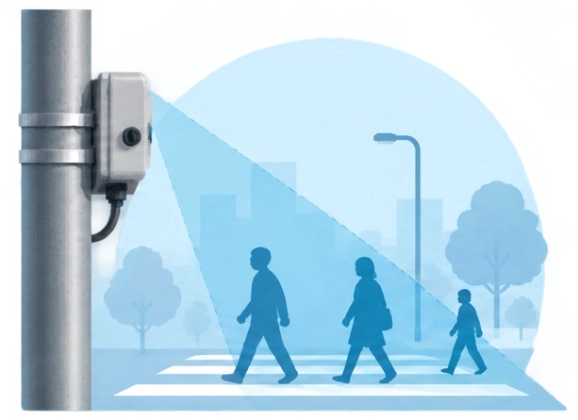
Detection in the crossing zone, with no image capture
60 GHz· No image capture
Detection:presence and approach
EventRS-485 · UART
Standard2 opto-isolated outputs
See the sensor →
Pedestrian detection

What is a pedestrian crossing sensor?

A pedestrian crossing sensor is the detection layer of a pedestrian detection system for crossings: it recognises when someone is crossing or about to cross, and hands that event to the system that governs the signalling at the site.

01 Radar sensor monitoring the pedestrian crossing area Detect

The sensor watches the configured zone and recognises pedestrian presence and approach.

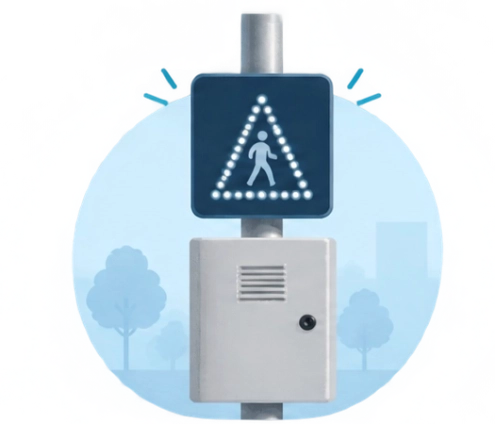
02 Warning lights activated at a pedestrian crossing Activate

The event reaches the system that governs the signalling, at the moment someone is there.

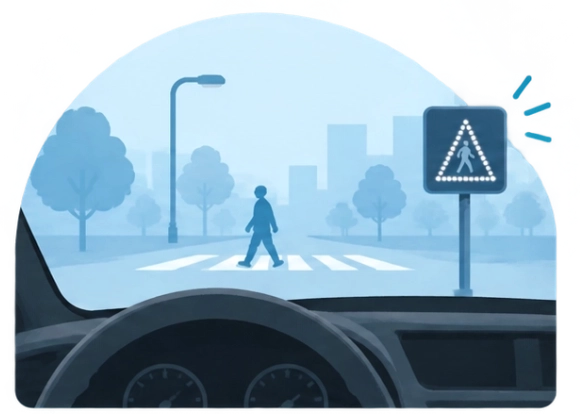
03 Vehicle approaching a pedestrian crossing with warning lights activated Warn

Drivers receive the warning when the configured signalling system is activated.

Crossing zones

Actuation conditioned by presence

Fixed signalling does not change according to whether a pedestrian is there. Detection lets the infrastructure receive an event when there is presence or approach inside the configured zone.

From that event, the project decides what is activated and for how long. That chain — detection, event, controller, actuation — is what a smart pedestrian crossing or a smart crosswalk adds over fixed signalling.

The zone is defined in two parts. The crossing zone, covers the crossing itself and its immediate approaches. The approach or kerbside zone, covers the footway stretch where a pedestrian arrives or waits before entering the carriageway. Detecting the approach allows the signalling to be activated before the pedestrian steps onto the carriageway. How the two parts are split is configured per site: no single geometry fits every crossing.

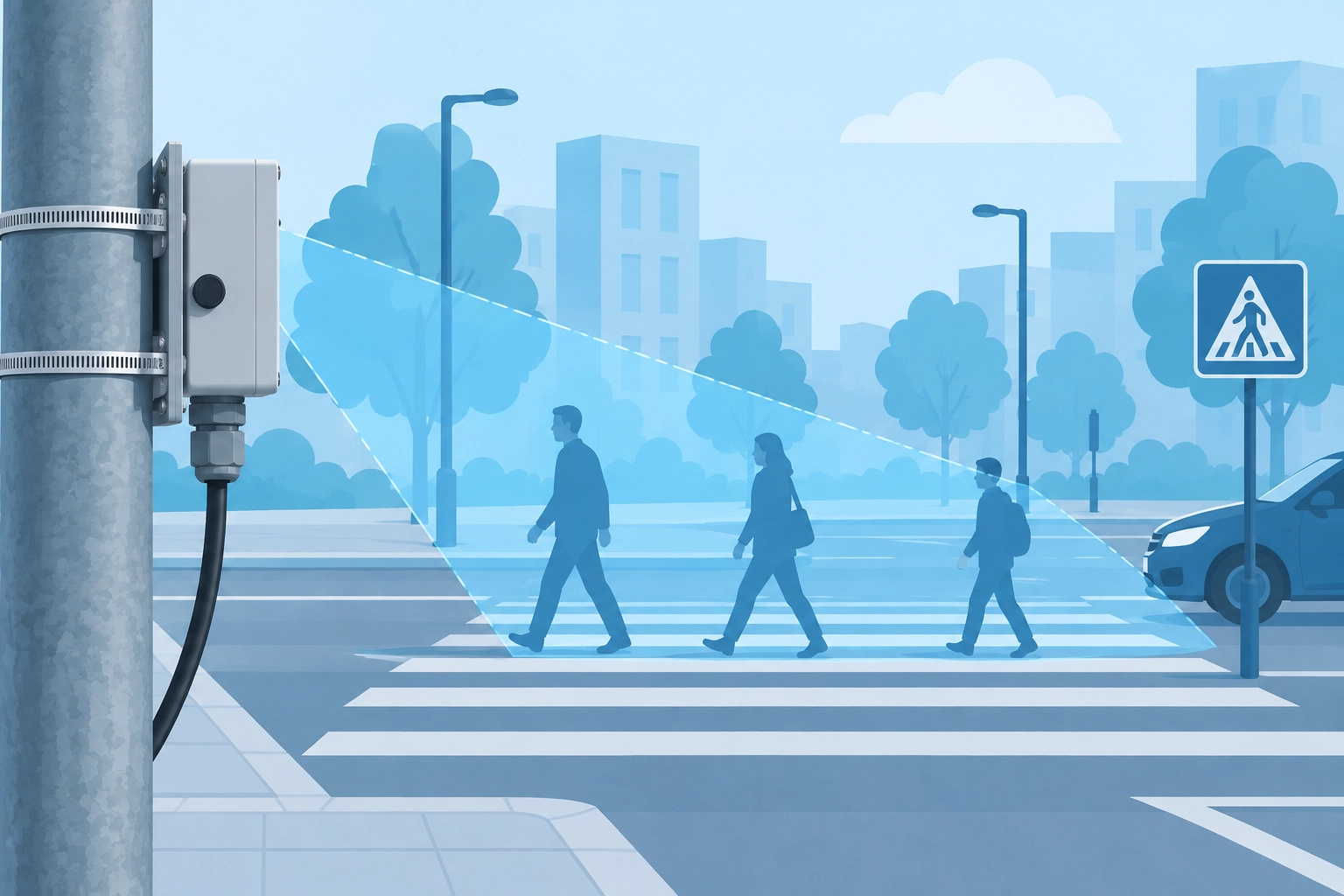
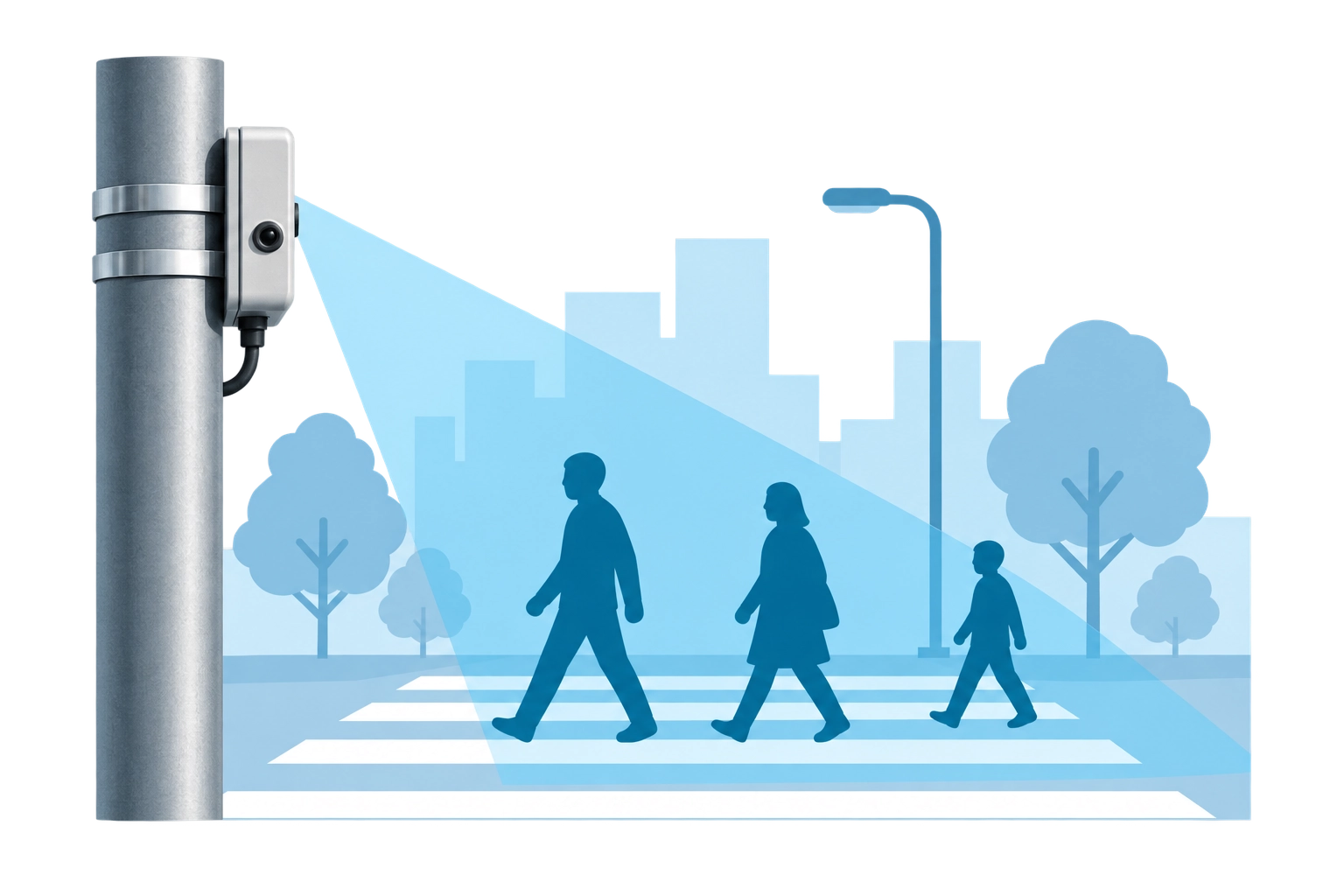
Pedestrian detection radar mounted beside a crosswalk
Detection in the configured zone, from the side of the carriageway.
What it detects
  • Pedestrian presence inside the configured crossing zone.
  • Pedestrian approach towards that zone, before the crossing starts.
  • And it delivers the event to the system that governs the signalling.
What it does not do
  • It does not identify people or read licence plates.
  • It does not capture photographs or video of the crossing.
  • It does not control the complete crossing: the project defines the actuation logic.

For counting, historical records and mobility analytics the architecture is a different one: uRAD Smart Traffic.

To act now

Knowing a pedestrian is there

You need real-time detection.

To analyse the flow

Knowing how many have passed

You need counting and history, and that is uRAD Smart Traffic.

Step by step

How radar pedestrian crossing detection works

This radar pedestrian detection architecture monitors the configured crossing zone: inside that zone the radar works as a pedestrian presence sensor and generates an event when it detects presence or approach. That event can be used directly through the outputs of the Standard version, or sent to a traffic controller, PLC or external system.

01 Detection:

The 60 GHz radar watches the crossing zone and detects presence and approach, independently of visible light.

02 Event

Detection becomes a real-time event, available over RS-485 or UART.

03 Output or controller

The Standard version provides two opto-isolated outputs that can be used to trigger or interface with an external element; in larger integrations the event goes to a traffic controller, PLC or external system.

04 Actuation

The detection event can be used by pedestrian crossing lighting or warning systems, activating them when presence or approach is detected. What is activated — beacon, crossing lighting, variable message sign or a notice to the controller or control centre — is defined by the traffic project.

This architecture uses uRAD Smart Radar Sensor Standard as the sensing layer and the source of the detection event.

What uRAD provides

The sensor and the detection event

Radar sensing, a configurable detection zone and delivery of the real-time event over RS-485, UART or the two outputs of the Standard version.

What the traffic project provides

The signalling and the control logic

The beacon, lighting or signal assembly, the controller that receives the event, the actuation logic and timings, accessibility functions and the approvals applicable to the installed system.

Site qualification

Siting and installation criteria

The detection zone is configured per site. Geometry, mounting point, orientation, occlusions and integration determine how the installation has to be planned.

It fits when

  • Zone is clearly delimited, with no overlap with adjacent crossings or accesses.
  • Mounting point is stable and correctly placed relative to the crossing.
  • Geometry is clear between the sensor and the crossing area.
  • ITS or municipal has a defined receiving system and interface.
  • Height and angle are stable and repeatable across the remaining crossings.
  • Power and cabling to the receiving system are already solved in the project.
The site needs reviewing when

  • Detection zones overlap with adjacent crossings or accesses.
  • There is no suitable position for the mounting point at the site.
  • Detection occlusions: vegetation, street furniture or parked vehicles.
  • The controller at the site is still undefined.
  • The mounting may shift after installation.
  • Detection electrical or ducting constraints at the site.

There is no single configuration, and no useful detection range should be promised independently of mounting and geometry: carriageway width, number of lanes, position of the support relative to the crossing and the presence of occlusions all change the result. Nothing is installed in the carriageway, but the project does solve power and cabling to the system that receives the event.

Tell us what the site looks like and we will review the siting before defining the equipment.

Validate my crossing
Comparison

Radar, camera or pushbutton for crossing activation

Three common ways to activate signalling at the moment of the crossing. None of them wins on every criterion.

CriterionFor real-time activation Radar detecting pedestrians in the crossing area RadarAutomatic, by presence and approach CameraAutomatic, by image analysis PushbuttonManual: depends on the pedestrian pressing it
Type of activation Automatic, by presence and approach Automatic, by image analysis Manual: depends on the pedestrian pressing it
Dependence on visible light Does not depend on visible illumination Depends on illumination and image processing Not applicable
Image capture No images of people or licence plates May involve image processing and additional privacy requirements, depending on configuration and use No
Pedestrian interaction No pedestrian action required No action required where the analytics are configured for automatic detection Yes, it has to be pressed
Output to the external system RS-485, UART or two opto-isolated outputs Video or events, depending on the manufacturer Contact towards the controller
Visual evidence of what happened Not provided Yes, and it is its main advantage Not provided
Detection without images

The radar captures no photographs or video of pedestrians or licence plates, which reduces exposure to visual data compared with a camera-based architecture. The privacy assessment of the installed system depends on the other equipment and on the processing defined by the project.

The right option depends on the goals of each project.
Validation

Proof of concept on a real site

Before the mounting is replicated, the site is validated: detection and approach zones, pedestrians outside the zone, grouped and simultaneous pedestrians, unwanted activations, controller response and mounting stability.

  1. 01Site and zones Road type, surroundings, available supports and which area has to be watched.
  2. 02Mounting and configuration Support, height and angle, and adjustment of the detection zone on the real site.
  3. 03ITS or municipal Sensor output and receiving system: the Standard outputs, RS-485 or UART, plus any interface relay.
  4. 04Observation and acceptance Behaviour with the system that will receive the event, and acceptance criteria agreed before the mounting is replicated.
  • 60 GHz radarMillimetre wave
  • ITS or municipalRS-485 / UART
  • Robust designOutdoor roadside installation
uRAD Smart Radar Sensor
Main equipment

uRAD Smart Radar Sensor Standard

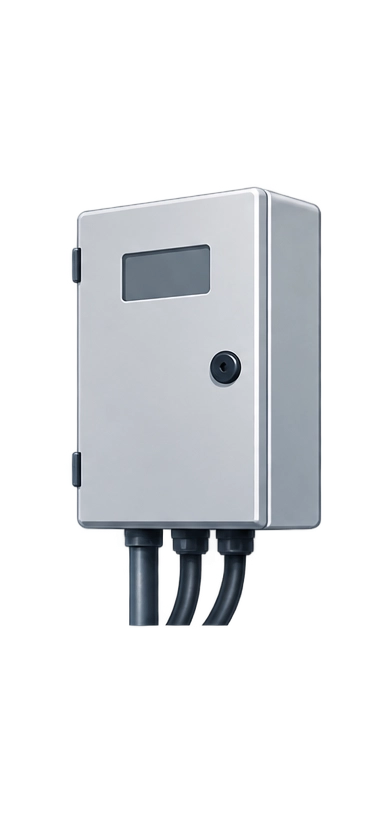
Radar sensor for real-time pedestrian detection in crossing zones and integration with external systems, with RS-485 or UART communication and two opto-isolated outputs.

  • Configurable detection
  • Real-time event
  • Straightforward integration
  • Outdoor-ready design
View technical specifications and integration options →
Profiles

Who this is for

Different roles, one shared requirement: reliable detection that another system can use.

  • ITS integrators and installers Equip crossings inside a wider signalling or traffic-management project, with their own controller. They need a reliable event and a documented interface. See traffic sensing architectures →
  • Traffic-signal and OEM manufacturers Add detection to their beacons, signs or lighting assemblies and need a sensor that fits their product and their electronics. See the radar sensor →
  • Road authorities and traffic engineering firms Municipalities, road authorities and consultants who define the project, validate the site and write the specification for the crossing. They need technical criteria they can defend. Validate a crossing →

Pedestrian crossing detection FAQ

Can the radar activate warning lights or crossing lighting?

The Standard version provides two opto-isolated outputs that can be used to trigger or interface with an external element according to the detected event. In larger integrations the event is sent over RS-485 or UART to a traffic controller, PLC or external system that manages the actuation. In both cases uRAD supplies the sensor: the lighting or signalling equipment, its approvals and the control logic belong to the traffic project.

What makes a conventional pedestrian crossing a smart pedestrian crossing?

The detection layer. In a conventional pedestrian crossing, the signalling does not change depending on whether a pedestrian is present. In a smart pedestrian crossing, a sensor detects pedestrian presence or approach within the configured zone and generates an event so that warning lights, crossing lighting or an external controller can respond when needed. uRAD provides the radar pedestrian detection layer and the real-time event; the signalling equipment and actuation logic remain part of the installed traffic-control system. In US terminology, the same architecture may also be described as a smart crosswalk.

Does pedestrian detection work at night?

Yes. Radar detection does not depend on visible illumination. The Standard version has an IP66 housing for outdoor installation, and the behaviour of the system is validated on the specific site.

Does the sensor require equipment embedded in the road?

No. The sensor is mounted on existing supports — a pole, a mast, a lighting column or the signalling assembly itself — with no cutting of the pavement and no detectors placed on the crossing. The project does solve power and cabling to the system that receives the event, and both depend on the site.

Does the radar capture images of pedestrians?

No. The radar captures no photographs or video of pedestrians or licence plates, which reduces exposure to visual data compared with a camera-based architecture. The privacy assessment of the installed system depends on the other equipment and on the processing defined by the project; this page is not legal advice.

Updated: September 2026

Next step

Tell us about the crossing and what has to react on detection

We will review the site, the detection zone and the integration with the system that is going to receive the event.

  1. 01
    You describe the siteRoad type, country, and how many crossings you want to equip.
  2. 02
    We review the sitingSupport, geometry, detection zone and integration with your controller.
  3. 03
    You get the criteriaSensor version, configuration and the next steps.

Proof of concept available for qualified projects.

Validate my crossing

Pedestrian detection

Fields marked with * are required.

    01 · CONTACT

    02 · The crossing

    Your data is safe