Application · Cycling mobility & Smart City

Bicycle counting in bike lanes with radar, no cameras

Measure how your cycling infrastructure is really used with a bicycle counting system based on 60 GHz FMCW radar: the sensor detects every passage and records speed and direction, delivering continuous 24/7 data with no civil works and privacy by design.

Used by local authorities, mobility engineering consultancies and system integrators to plan and evaluate cycle networks with objective data.

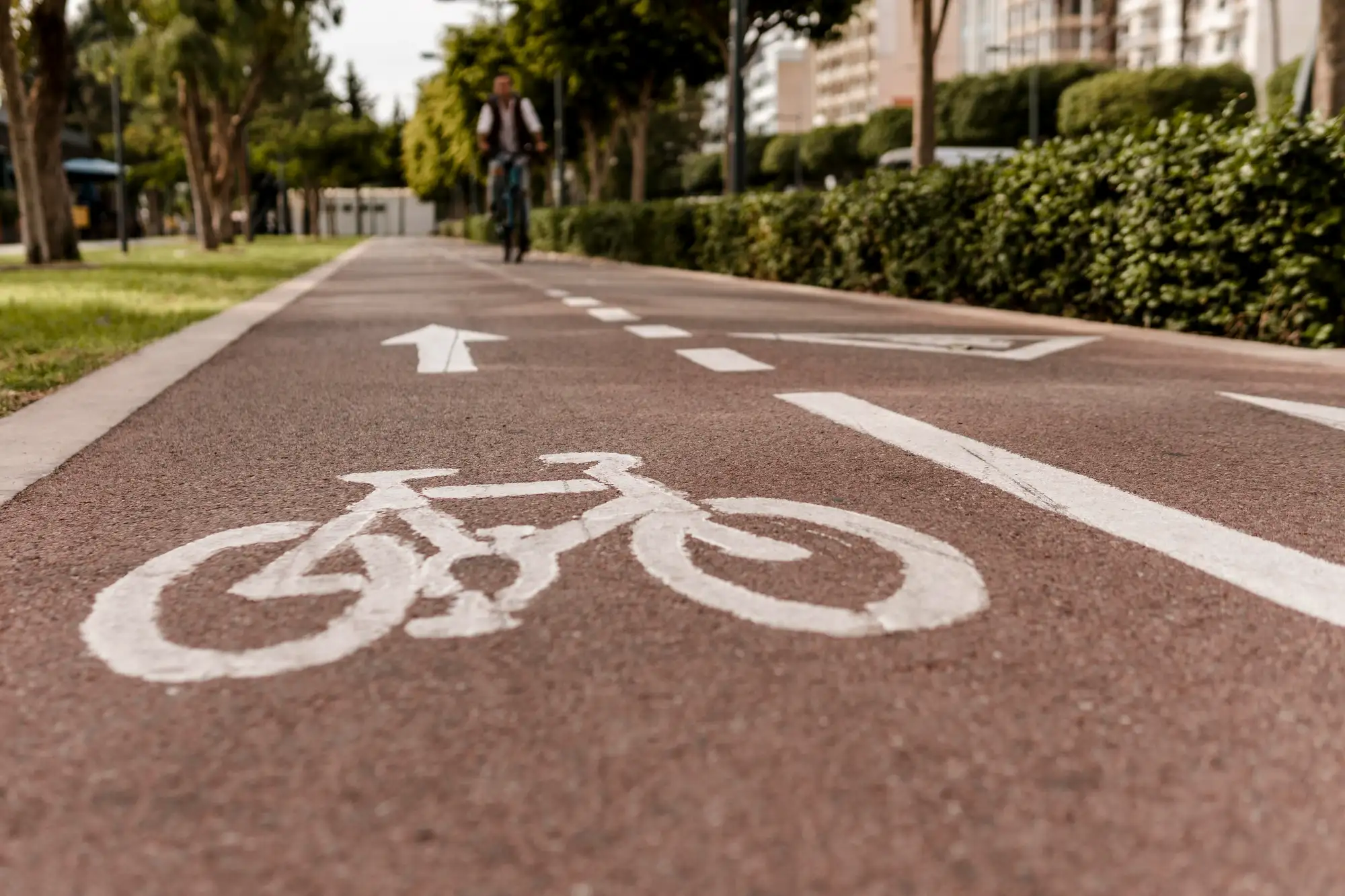
Contador automático de bicicletas con radar instalado en un carril bici urbano
No cameras No roadworks 24/7 Speed and direction
  • 8bicycle counters installed in Pamplona
  • 2,7 Mcyclist passages recorded
  • 24/7continuous data, no cameras
See the real case →
Concept

What is radar bicycle counting?

Radar bicycle counting is a cycle counting system that detects every cyclist riding along a bike lane, cycleway or shared path and records the passage automatically and continuously. Instead of a camera or a buried inductive loop, the detection layer is an FMCW radar sensor that measures movement using radio waves.

Beyond counting, the sensor records the speed, direction of travel and a timestamp of every passage and delivers structured data, which your platform aggregates to reveal how the infrastructure is actually used and to plan and evaluate a cycle network with objective evidence on active travel.

What is a bicycle counter?

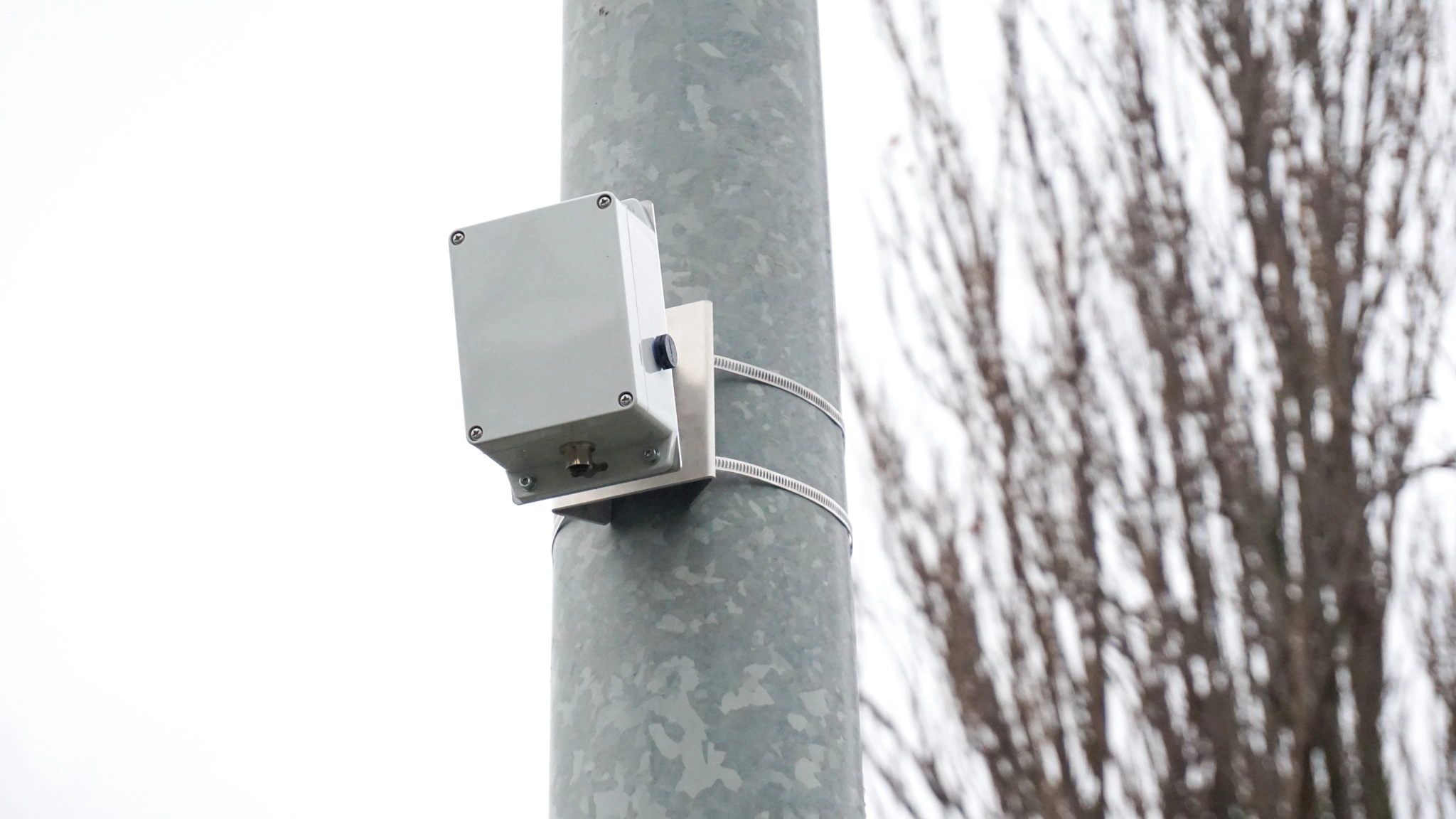
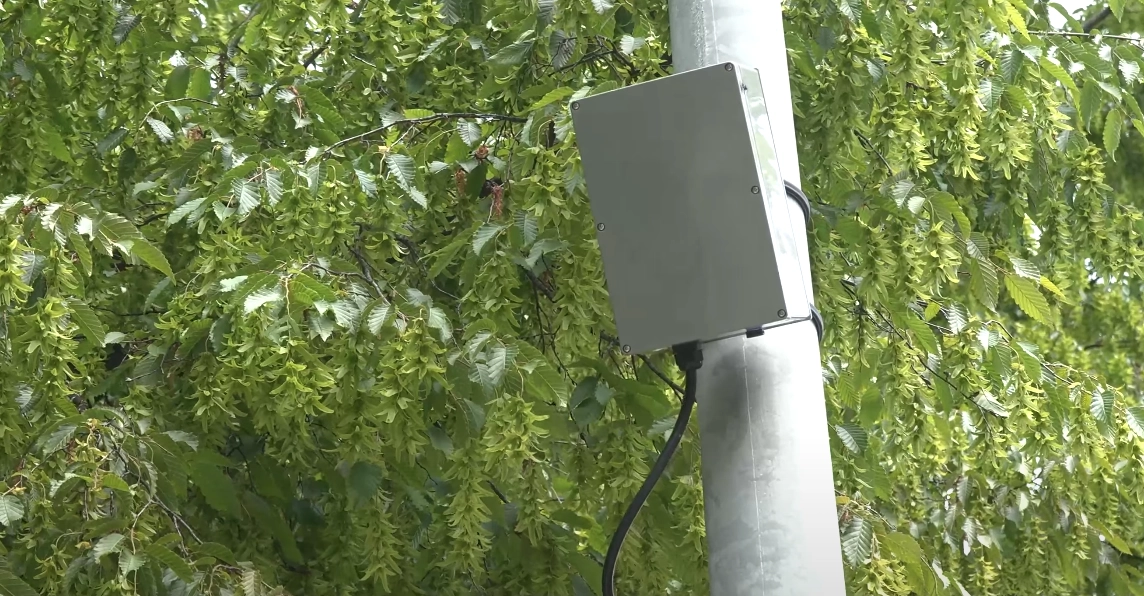
A bicycle counter is the equipment that carries out that counting at the survey site. In a radar installation, the bike counter is a sensor with no moving parts, mounted on a pole or lamp post beside the lane; it detects every passage and delivers the data to the platform that stores and reports it. Unlike a manual count or a one-off survey with tubes, it works automatically and unattended, which is what makes continuous measurement over months or years possible.

This page covers the specific case of bicycle countingIf you want to compare traffic counting technologies in general, the reference is our guide to vehicle counting and classification systems. If you need the complete traffic counting and analytics solution, with storage, historical data and reporting, the product is uRAD Smart Traffic. If you plan to embed radar detection into your own system, the radar sensor for integration is uRAD Smart Radar Sensor.

  • Cyclist counts
  • Individual speed
  • Direction of travel
  • A record per passage
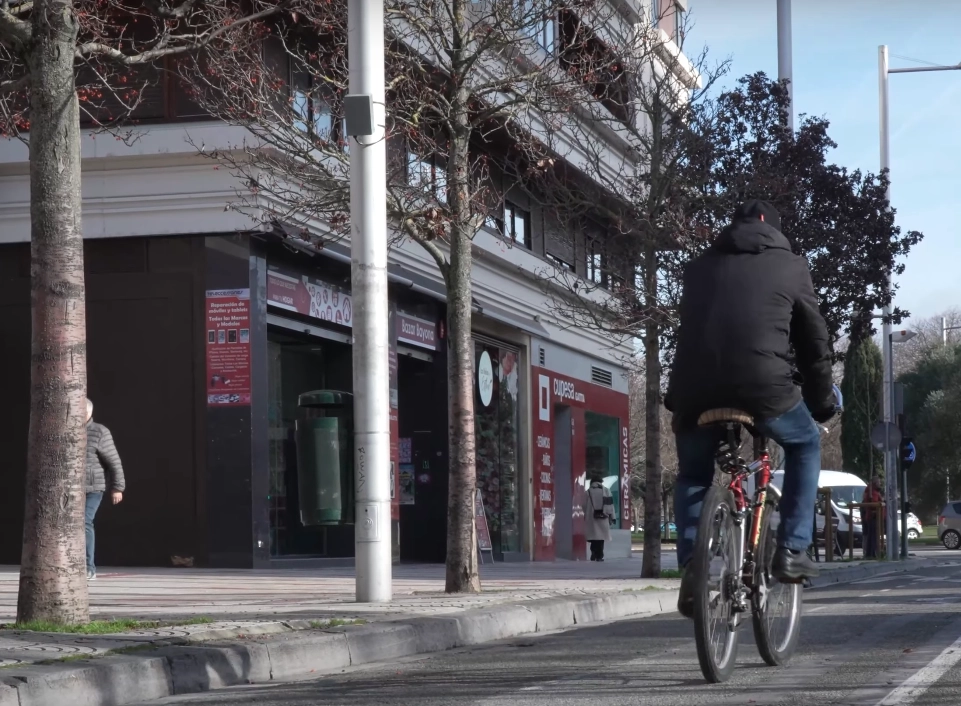
Sensor radar uRAD midiendo el paso de bicicletas en un carril bici
Cycle counting on an urban bike lane
Data flow

How automatic bicycle counting works

BicycleRides along the bike lane
FMCW RadarDetects at 60 GHz, 160°
Data per passageSpeed · direction · event
Mobility platformCounts · history · analytics

The radar detects every passage and generates structured data — speed, direction and timestamp — sent to a reporting solution or municipal platform.

What cycling mobility data do you get?

The sensor measures each passage; your reporting platform aggregates those passages into the indicators used to size and evaluate the cycle network.

Detection layer

Data the radar measures

SpeedDirectionPassageUser type
  • Speed of each cyclist, useful for analysing rider behaviour and lane safety.
  • Direction of travel, distinguishing inbound, outbound and wrong-way riding.
  • A record per passage with its timestamp and associated parameters.
  • Bicycles, e-scooters and pedestrians differentiated according to the lane configuration.
Reporting layer

Data the platform produces

Daily volumePeak hoursTrendsDirectional split
  • Daily cycle volume to size the demand on the route.
  • Hourly distribution and peak hours from the aggregated passages.
  • Monthly and seasonal trends to spot changes in usage.
  • Directional split, including wrong-way riding.
Hourly distribution of cyclist passages Illustrative representation of aggregated data
0
2
4
6
8
10
12
14
16
18
20
22
Usage curve built by aggregating the recorded passages. The sensor supplies the per-passage data; the charts, thresholds and reports depend on the reporting platform.

How a cycle counter is installed on existing infrastructure

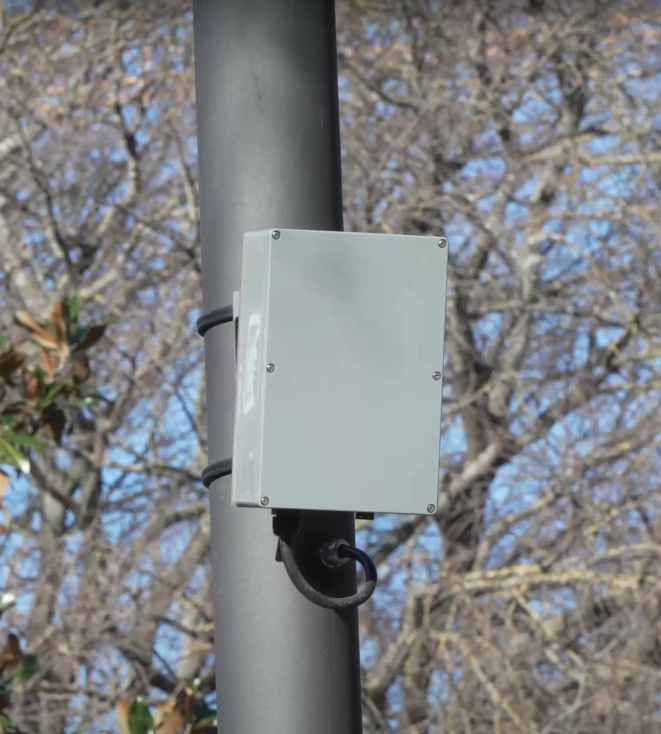
Sensor radar uRAD montado en un poste junto a un carril bici, con la zona de detección sobre la calzada Radar SensorMounted on an existing pole or lamp post Detection zoneCovers the full width of the bike lane No work on the pavementNo loops or tubes on the surface
  • Radar SensorMounted on an existing pole or lamp post
  • Detection zoneCovers the full width of the bike lane
  • No work on the pavementNo loops or tubes on the surface

Mounting relies on street furniture that is already in place, with no trenching and no need to close the route during installation.

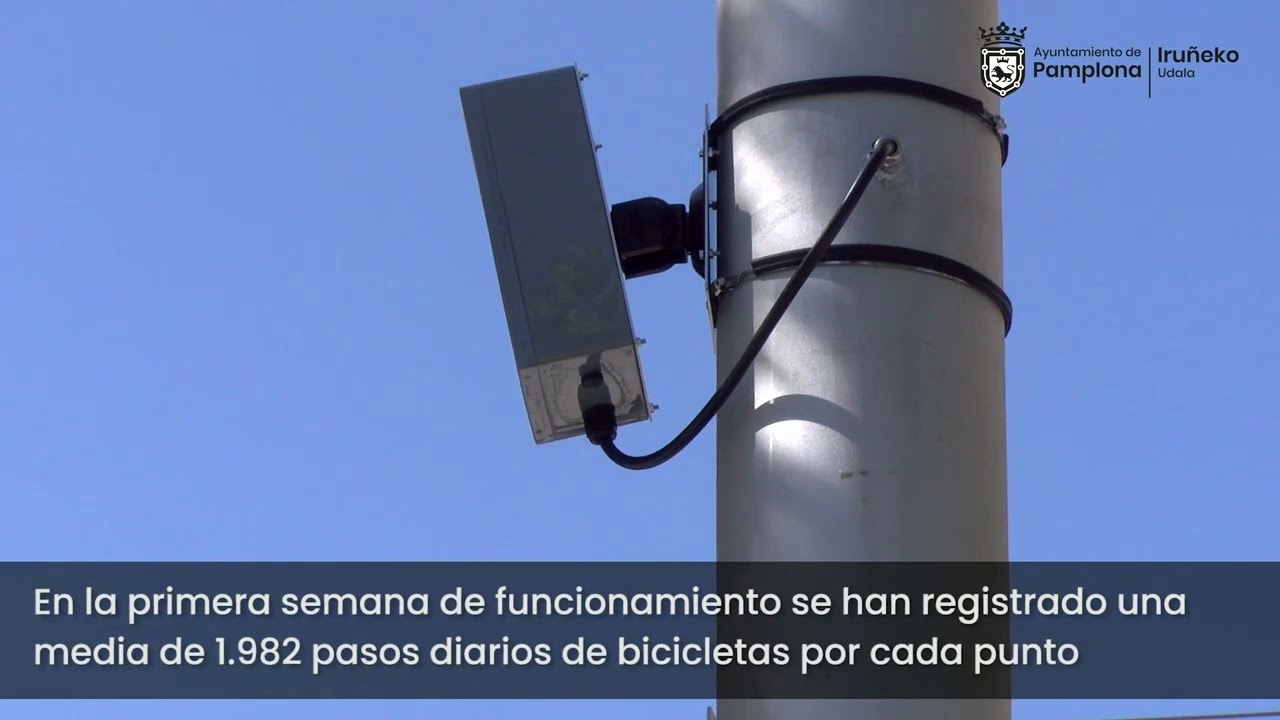
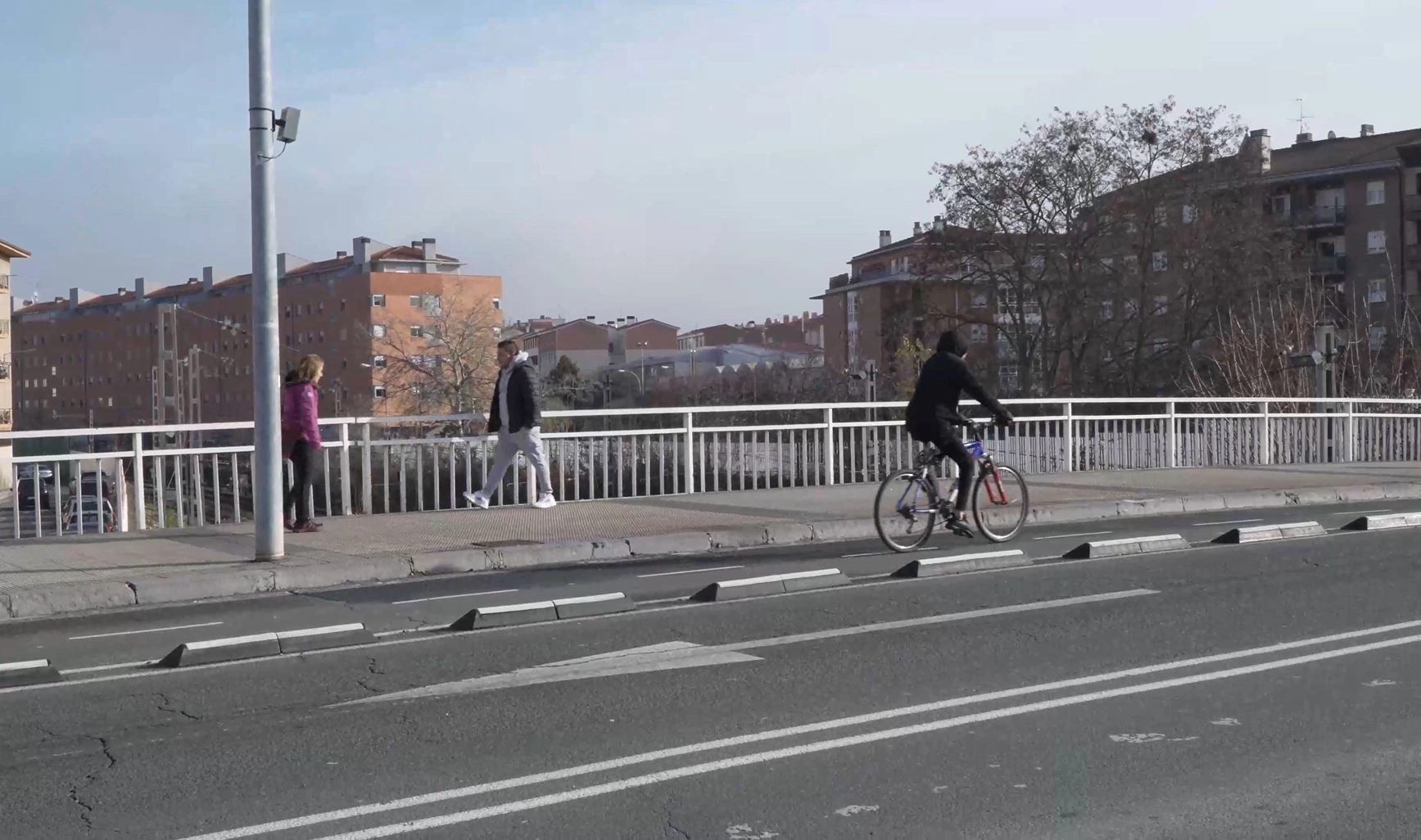
Aforador de bicicletas con radar uRAD instalado en la red ciclista de Pamplona
Cycle counter on the Pamplona network
2,7 M

2.7 million cyclist passages measured in Pamplona

Eight radar counters installed at strategic points of the cycle network recorded 2,734,426 passages as part of the city's Go Green strategy, with continuous 24/7 data and no cameras.

7.492bicycles / day
18,8km/h average
8sensors on the network

The 62.9% of cycle traffic heads towards the city centre, with higher volumes during term time and a usage peak between 2 pm and 3 pm. The data provides objective evidence to evaluate how the cycle network is used, identify mobility patterns and support urban planning decisions.

  • ProblemUnderstanding how the cycle network is really used, to ground the city's mobility strategy in its own data.
  • SolutionRadar cycle counting, with no cameras and no civil works on the lanes.
  • Deployment:Eight counters at strategic points of the network, measuring continuously.
  • ValueVolumes per section, directional split and hourly patterns to plan and evaluate interventions.

Source: Pamplona City Council ↗

Discuss my case
Benefits

Why radar works for bicycle counting

A radar-based counting system solves continuity, privacy and integration with low maintenance costs.

24/7 operation

Independent of light

The 60 GHz FMCW radar does not rely on visible light and is designed for continuous outdoor operation, including night-time measurement.

ContinuityStable data capture day and night.
Best forSites that need uninterrupted measurement all year.

Installation without civil works

On existing infrastructure

Mounted on existing poles or lamp posts, with no trenching and no buried sensors.

FastQuick deployment without closing the route.
SavingsAvoids the civil works cost of inductive loops.

Privacy by design

No cameras

Detects movement without capturing images of people or number plates, reducing the processing of personal data.

Sensitive sitesLess friction in urban environments where public scrutiny is high.

Professional integration

ITS y Smart City

Documented interfaces deliver the sensor data to municipal platforms, ITS systems or your own dashboards, which handle storage and reporting.

OpenProtocol designed for integrators and projects that centralise network data.

In addition: low power consumption suitable for standalone supply depending on configuration, and an IP66 enclosure with no moving parts for permanent unattended installations.

Why radar for cycling

Why radar fits cycle counting

Compared with inductive loops, pneumatic tubes or optical systems, radar brings continuity, privacy and non-invasive installation. Right below is the criterion-by-criterion comparison applied to the bike lane.

Radar, cameras, inductive loops and pneumatic tubes applied to cycle counting

A comparison focused on the bike lane case, where the road user is light, the lane narrow and the volume lower than on a vehicle carriageway. No technology wins on every criterion: the right choice depends on the site, the timescale and what the data is for.

CriterionRadarCameraInductive loopPneumatic tube
Automatic countingYes, continuousYes, with image processingYes, with a loop sized for bicyclesYes, for short surveys
SpeedMeasured directlyEstimated, system dependentEstimated with a double loopEstimated with a double tube
Direction of travelYesYesWith a double loopWith a double tube
PrivacyNo image capturedCaptures images: needs processing grounds and justificationNo image capturedNo image captured
Civil worksNone: mounted on existing street furnitureNone, but needs a pole and clear line of sightYes: the pavement has to be cutNone, but places equipment on the surface
Night-time OperationIndependent of lightDepends on lighting or infraredIndependent of lightIndependent of light
Weather conditionsBuilt for continuous outdoor useSensitive to rain, fog, dirt and glareBarely affected once buriedSensitive to wear and displacement
MaintenanceLow, no moving partsLens cleaning and periodic adjustmentLow, but any repair means diggingHigh: fixing, wear and removal
  • When a camera fits betterIf the project needs detailed visual classification or a photographic record of what happened, and image processing is justified and accepted.
  • When a loop fits betterOn narrow, clearly delineated lanes, especially where loops are already in place or pavement works are planned anyway.
  • When a tube fits betterFor a one-off survey of a few days on a very tight budget, accepting its fragility and the field maintenance it needs.

Cycle counting without cameras or image capture

In urban projects, image processing can be a sensitive issue. Because it is based on radar rather than video, bicycle counting presents a different privacy profile from camera-based solutions.

  • No image capture of cyclists, pedestrians or number plates.
  • Lower exposure to identifiable data than video-based systems.
  • Can simplify deployment and reduce public friction in sensitive urban areas.

Compliance always depends on the applicable regulation, on how data is processed and on the specific configuration of each project. This page does not constitute legal advice.

Is it feasible on your bike lane?

We only need four details to assess your installation. We review the rest with you.

Assess my installation
  1. 01Number of sitesSections of the network you want to measure
  2. 02Lane widthUsable width of the area to be crossed
  3. 03DirectionsWhether inbound and outbound must be separated
  4. 04PowerMains connection available or standalone solution
Other details we review with you
  • Detection of e-scooters and pedestrians
  • Whether speed needs to be measured
  • Poles or mounting points available
  • Connectivity at the site
  • Integration with a platform or in-house system

Where radar bicycle counting is used

Three contexts account for most projects, and each one needs a different kind of data.

Carril bici urbano aforado con radar para la planificación municipal de la red ciclista

Urban networks and local authorities

Volumes per section and trends over time to plan, justify investment and evaluate interventions on the cycle network.

Estudio de movilidad con sensor radar para aforos ciclistas antes y después de una actuación

Engineering and mobility studies

Before-and-after surveys around a scheme, temporary counts and field validation with per-passage speed and direction data.

Integración de datos de tráfico ciclista en una plataforma Smart City e ITS

ITS and Smart City integration

Delivering data to municipal platforms, ITS systems or in-house dashboards, including shared paths with e-scooters and vehicles.

The solution

From cycle counting to the uRAD solution

Bicycle counting builds on two uRAD products. Choose according to your starting point.

Most local authorities and mobility consultancies start with Smart Traffic; integrators and manufacturers start with the sensor.

uRAD Smart Traffic Compact, solución de aforo y analítica para conteo de bicicletas uRAD Smart Traffic Compact

Frequently asked questions about radar bicycle counting

How does radar bicycle counting work?

A 60 GHz FMCW radar sensor emits radio waves and analyses the echo to detect every bicycle on the bike lane, measuring speed and direction and recording each passage with its timestamp, without capturing images. The reporting solution aggregates those records into counts, hourly distributions and usage trends.

How accurate is radar bicycle counting?

In validated configurations and installations, accuracy levels above 95%. The actual result depends on the lane geometry, the position and height of the sensor, traffic density, riding lines and possible occlusions, so every installation should be validated in the field.

Does radar bicycle counting respect privacy?

The radar captures no images of people or number plates: it detects movement using radio waves, which reduces exposure to identifiable data compared with camera-based solutions and can ease deployment in sensitive urban settings. Compliance depends on how data is processed, on the project configuration and on the applicable regulation.

Does it detect e-scooters and other micromobility as well as bicycles?

Yes. It detects personal light electric vehicles such as e-scooters, cargo bikes or tricycles travelling through the detection zone. The lane configuration allows sensitivity to be tuned to reduce false positives from pedestrians or other users.

Does installing a radar bicycle counter require civil works?

No. The sensor is installed on existing poles or lamp posts with no trenching and no buried loops, which cuts cost and installation time compared with inductive loops and avoids closing the route.

Does it work at night and outdoors continuously?

Yes. Because it is based on radar rather than imaging, it works day and night without relying on visible light, and it is designed for continuous outdoor operation. That is a meaningful difference from optical sensors, whose reliability depends more on visibility conditions.

What is the difference between radar, inductive loops and pneumatic tubes for counting bicycles?

The inductive loop senses the bicycle's metal mass from within the pavement: it is reliable on narrow, clearly delineated lanes, but it requires cutting the pavement and any repair means digging it up again. A pneumatic tube registers each passage by pressure: it is the cheapest option for a survey of a few days, though it wears, can shift out of place and is not intended for permanent measurement. Radar measures from the edge of the lane on existing street furniture, with no civil works, and supplies speed and direction per passage with low maintenance. The criterion-by-criterion table is further up this page.

Can it measure bike lane usage for an urban mobility study?

Yes, that is one of its common uses. Because every passage is recorded with a timestamp, speed and direction, it yields volumes per section, hourly distribution, directional split and trends over time, both in temporary surveys and in permanent measurement. It is the basis for comparing usage before and after an intervention on the route, provided both counts are made at the same site with the same configuration.

What cycling mobility data does it provide?

For each cyclist the sensor delivers a timestamp, speed and direction of travel. By aggregating that data, the reporting solution can generate counts by hour, day and month, hourly distribution, average speed, daily volume and trends over time, exportable and ready to integrate into mobility platforms.

Does it integrate with Smart City and ITS platforms?

Yes. Sensor data is transmitted through documented interfaces to integrate with municipal platforms, ITS systems or in-house dashboards, which handle storage and reporting. To embed detection into your own system, see the radar sensor for integration; if you prefer the complete traffic counting and analytics solution, the reference is uRAD Smart Traffic.

Next step

Want to measure how your bike lanes are really used?

Tell us which sections you want to count and we will assess the technical feasibility: locations, number of sites, power supply and how the data integrates into your platform.

  1. 1You describe the networkSites to measure, directions and power available.
  2. 2We review feasibilityWe check geometry, mounting and what data you can obtain at each site.
  3. 3You receive a proposalSizing, recommended solution and next steps.
BICYCLE TRAFFIC COUNTING ASSESSMENT

Request a Bicycle Traffic Counting Solution

Tell us about your project so we can assess the best bicycle counting solution for your site. Fields marked with * are required.


    We’ll review your project and get back to you with a feasibility assessment and recommended next steps.

    Evaluar instalación