Home/ Radar sensors/ uRAD Doppler
uRAD Doppler · radar CW · 24 GHz · UART · SDK Python

Doppler radar sensor 24 GHz for non-contact speed measurement

Professional radar module for integrators, engineering teams and developers who need to measure speed, direction and motion in real time. Ready for testing with GUI and Python SDK, and easy to integrate via UART and GPIO outputs.

322
km/h máx
±0.18
m/s accuracy
170
m range
SDK
Python + GUI
190 €excl. VAT · €229.90 incl. VAT
In stock · ships in 24–72 h
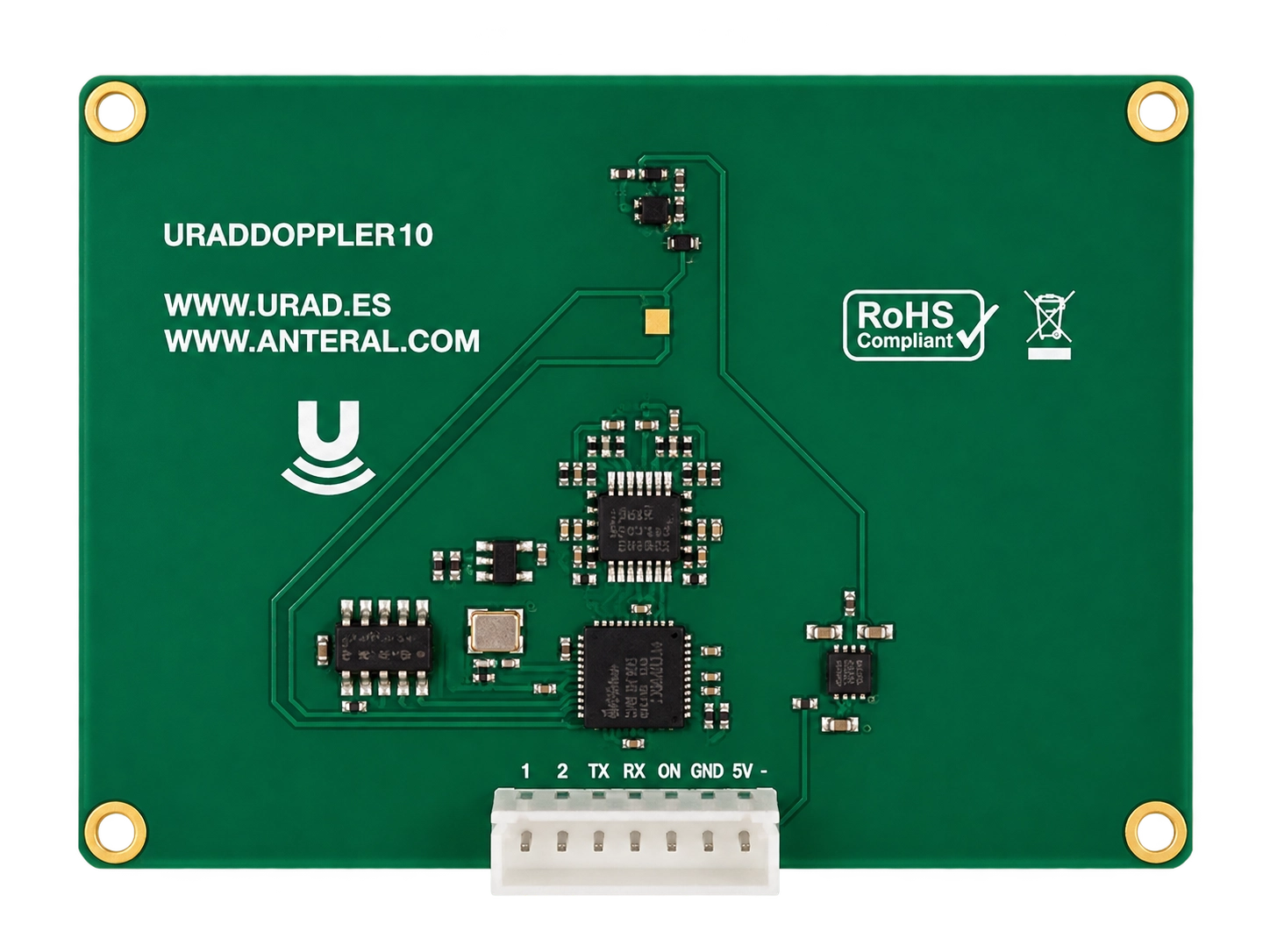
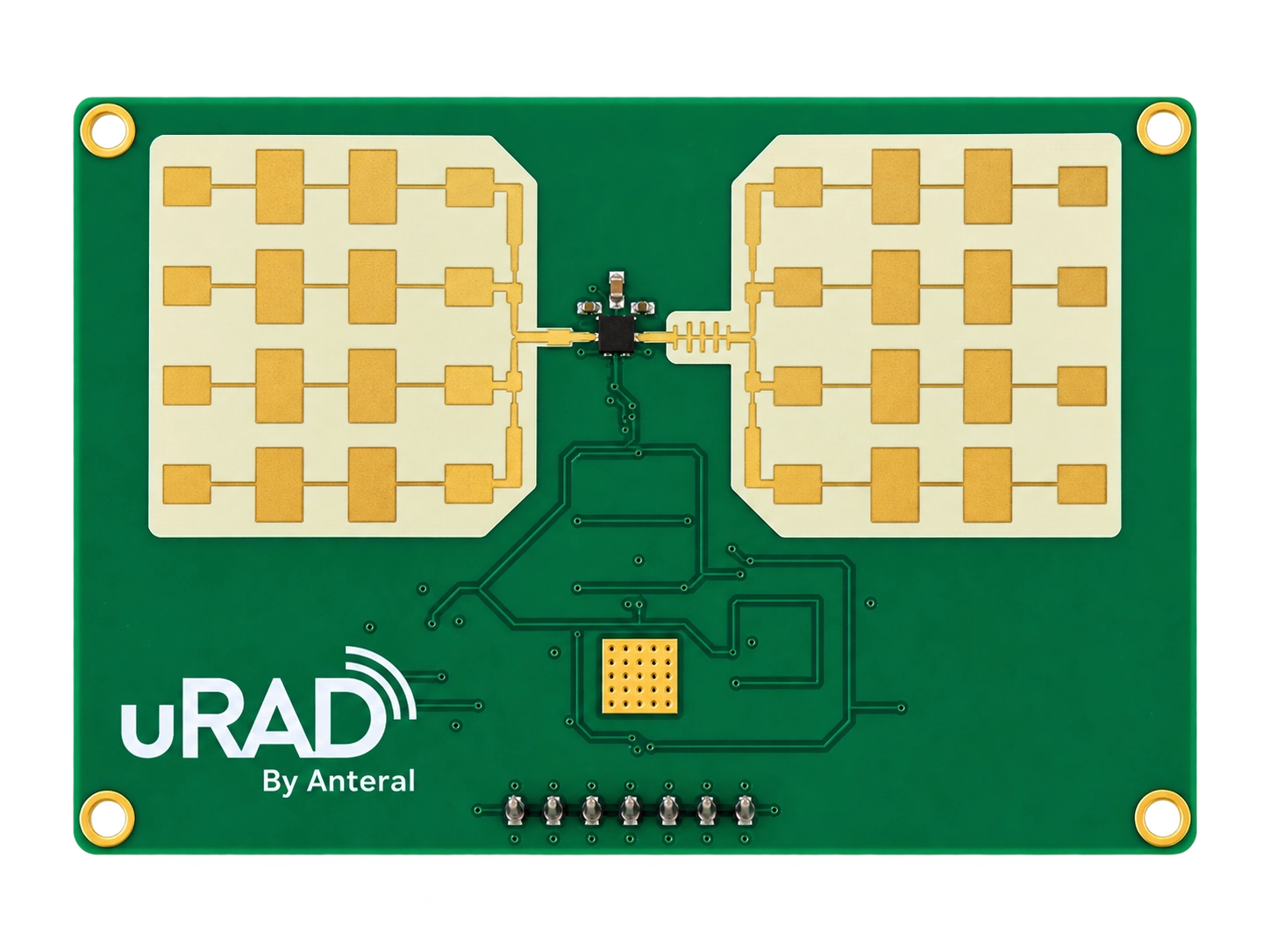
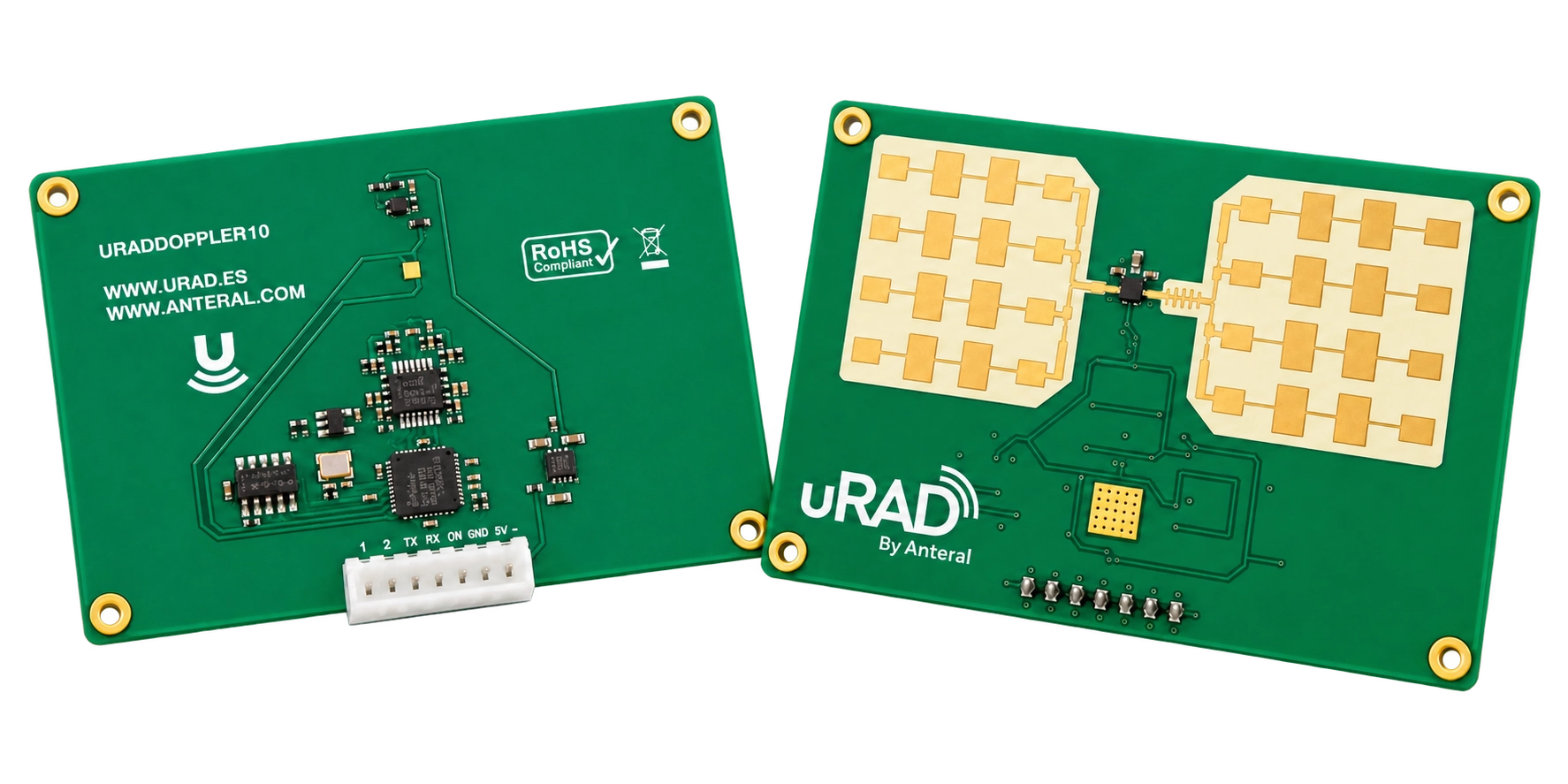
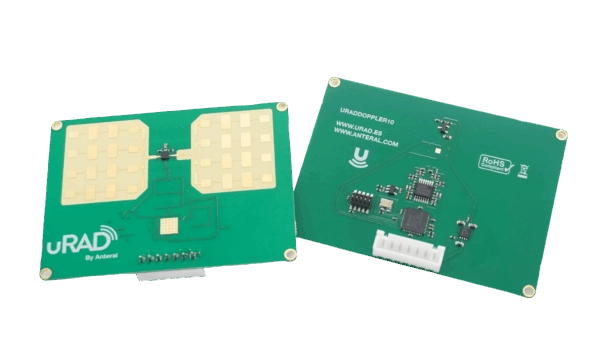
Sensor radar uRAD Doppler v1.0 de 24 GHz
CE and RoHS marked product
Vista superior
Vista inferior
01 The sensor

Measure speed, direction and motion with 24 GHz Doppler radar.

uRAD Doppler emits a 24 GHz continuous wave (CW) and analyzes its echo to determine target speed and direction in real time — with no cameras, no contact and no moving parts.

It integrates antennas and signal processing on a high-frequency substrate in an 8 grams, ready to connect via UART from day one.

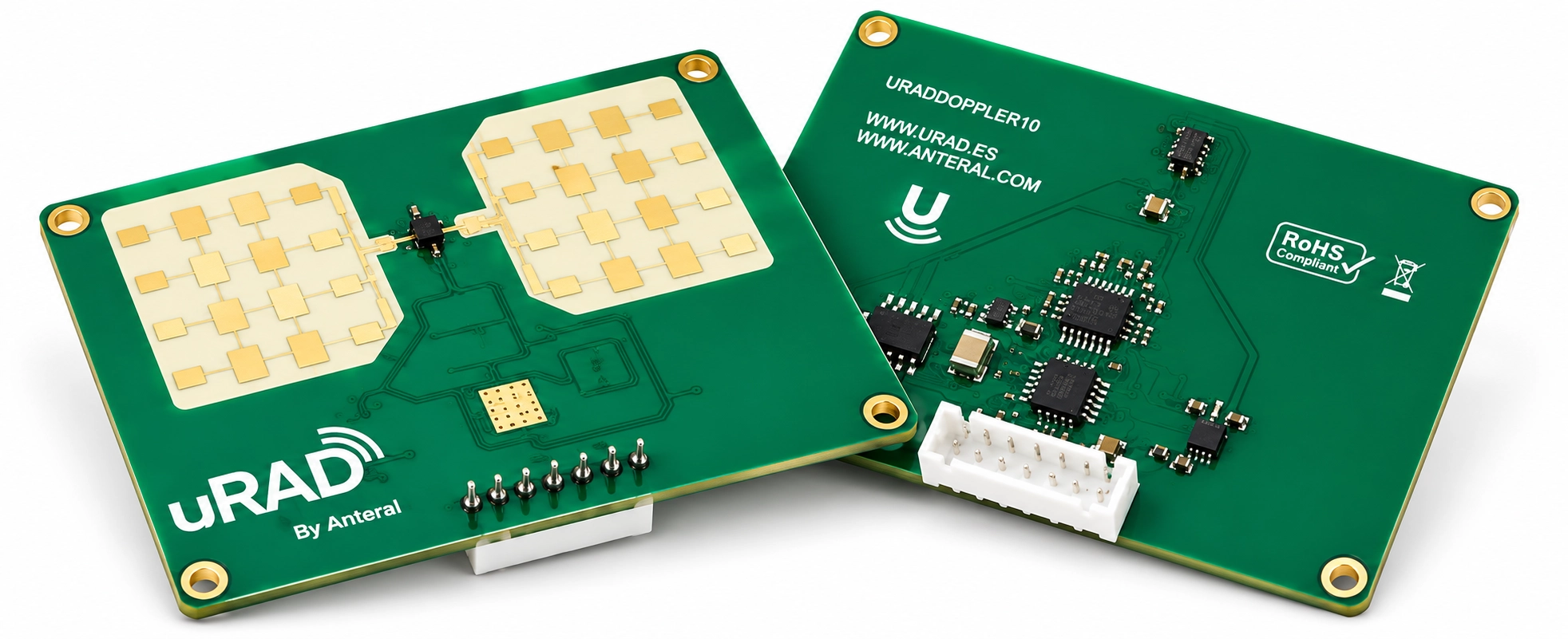
Módulo sensor radar uRAD Doppler v1.0
24GHz
ISM band · continuous wave
8g
76 × 55 × 10 mm
20S/s
Refresh rate
0.7W
Power consumption at 5 V DC
02 Is this sensor right for your project?

Designed for technical integration.

01

For integrators

Integratete non-contact speed measurement into speed feedback signs, panels, traffic systems or smart city solutions.

02

For engineering and R&D

Validate prototypes, analyze motion and access technical data through the Python SDK and RAW I/Q signals.

03

For makers and labs

Connect the module via UART, evaluate readings with the GUI and develop tests with microcontrollers or a PC.

03 What you get

Everything you need to start measuring.

The module comes with software, documentation and examples. Validate the sensor from a computer and then integrate it into your system via UART without starting from scratch.

In the box

  • uRAD Doppler v1.0 module
  • Open-source Python SDK
  • Evaluation graphical interface (GUI)
  • Technical documentation (datasheet and user manual)
  • START and RAW usage examples

Compatible with

  • PC via UART/USB adapter
  • Microcontrollers with 3.3 V UART
  • Python SDK (cross-platform)
  • Embedded systems
  • 3.5–6 V DC supply
04 Capabilities

Accuracy and direction in every reading.

Four capabilities that define what you can build with uRAD Doppler.

Industrial-grade accuracy

Measure from 8 km/h to 322 km/h with ±0.18 m/s (0.66 km/h) accuracy. Ideal for technical validation, speed monitoring and sports measurement.

Knows whether a target is approaching or moving away

Returns direction and speed in every frame, without extra sensors or external processing to determine movement direction.

Trigger external systems

Two threshold-configurable GPIO outputs can activate signs, alarms or panels when a target exceeds a set speed.

Advanced RAW I/Q data

Extract In-phase and Quadrature signals through the serial port for vibration analysis, micro-displacements or custom signal processing.

05 Applications

Applications for the Doppler radar sensor.

uRAD Doppler is primarily designed for non-contact speed and direction measurement. From that core capability, it can be integrated into technical applications where target motion is the key data point.

Vehicle speed monitoring

Build compact speed monitoring systems for urban and interurban roads. Measure up to 170 m with ±0.18 m/s accuracy, ideal for traffic monitoring and statistics.
170 m range322 km/h±0.18 m/s
Control de velocidad de vehículos con radar

Radar speed signs / smart city

Feed driver feedback displays and radar speed signs that show vehicle speed in urban and smart city environments. The two GPIO outputs can be triggered by speed thresholds to activate warning lights or deterrent messages.
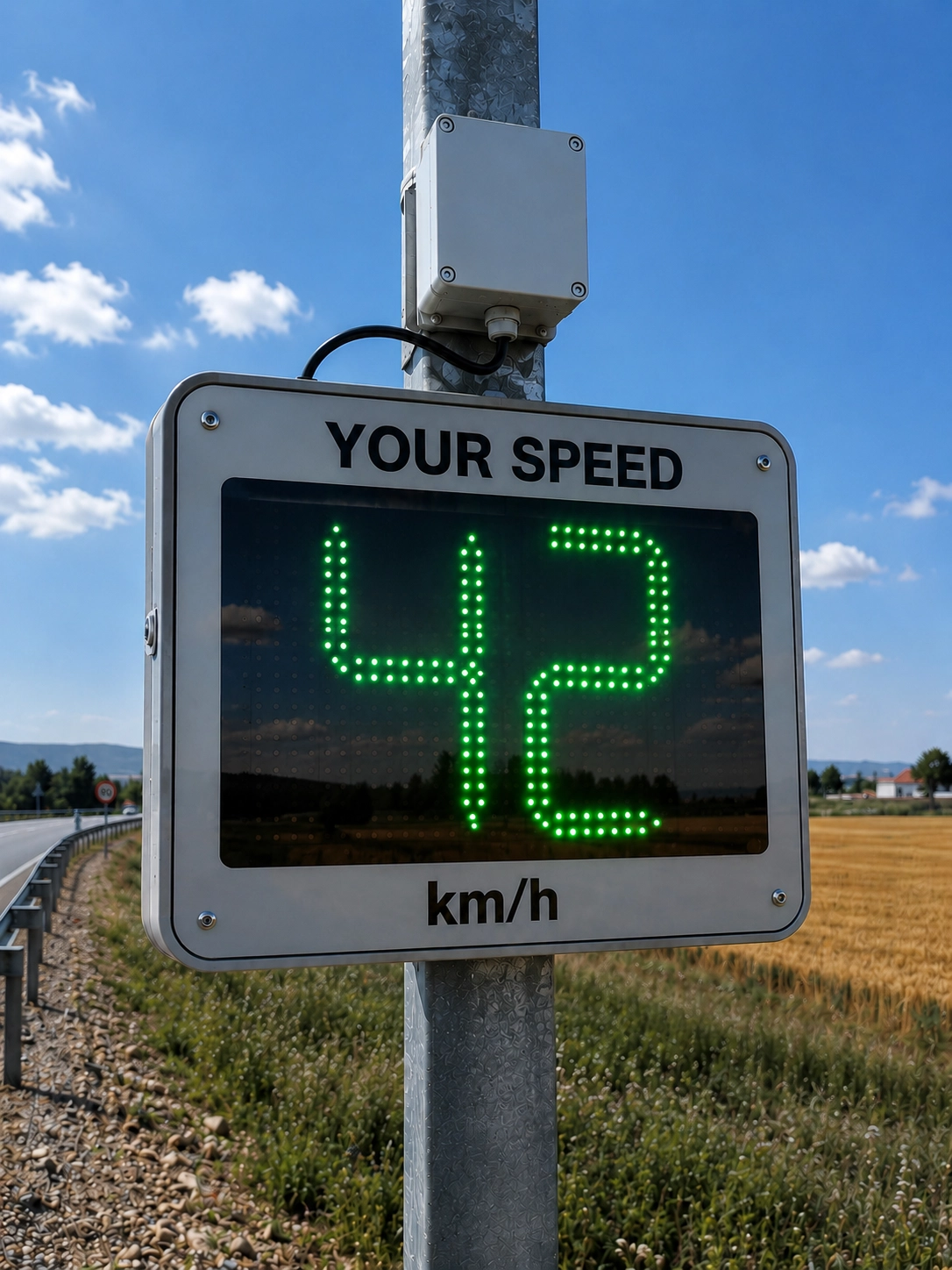
Threshold GPIOSpeed feedback signSmart city
Radar pedagógico de velocidad en carretera

Sports speed measurement

Measure speed in training, testing and prototypes. Capture moving objects — balls, athletes or mechanisms — with refresh rates up to 20 samples per second and a range up to 322 km/h.

20 S/s8–322 km/h±0.18 m/s
Medición de velocidad en deportes

Technical integration / R&D

Add speed and direction measurement to your own systems using the Python SDK, UART and GPIO outputs. Built for engineers, developers and R&D projects that need real-time motion data — including camera-free motion and presence detection as a secondary use case.
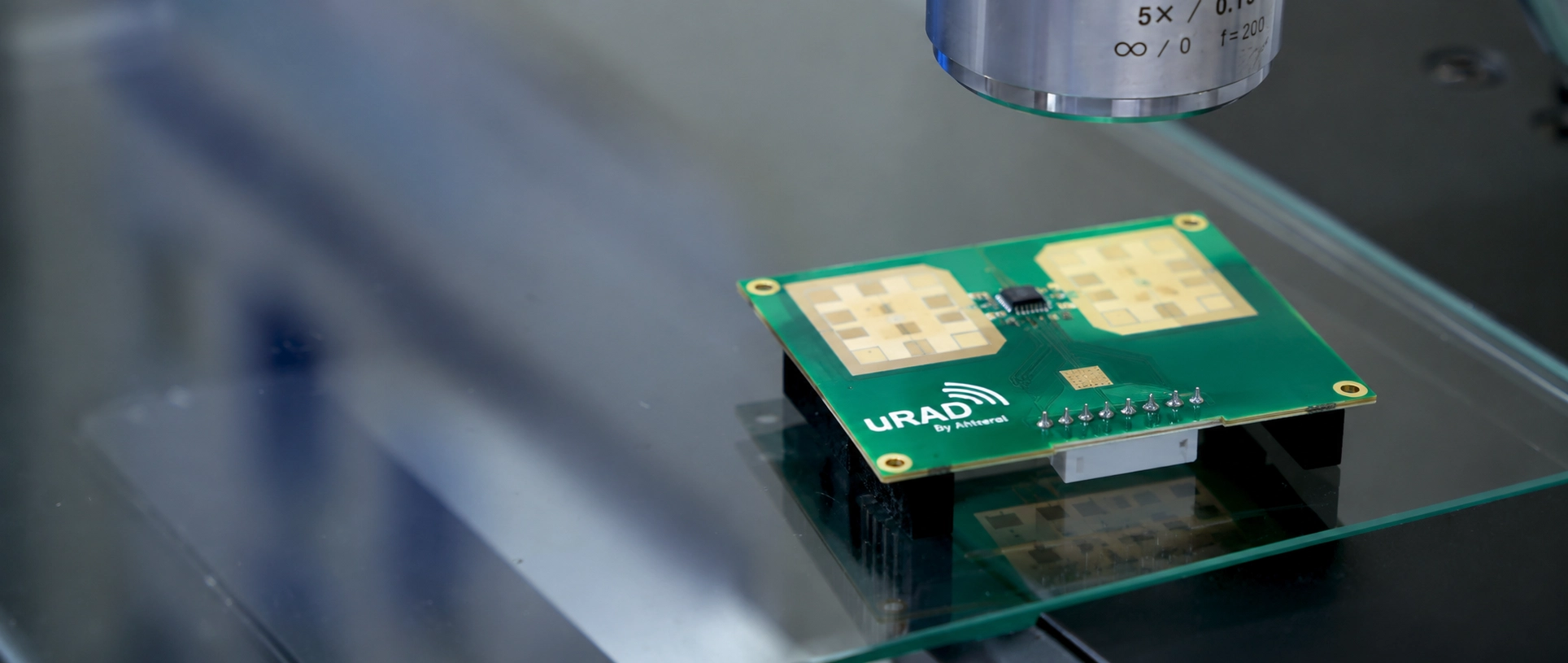
SDK PythonUART + GPIOSpeed and direction
Integración técnica del sensor radar uRAD Doppler

RAW I/Q data

Use the radar as an advanced analysis tool: access RAW I/Q data through the serial port to process vibrations, micro-displacements or custom signals in machinery, structures or lab setups.
RAW I/QVibraciónSignal processing
Análisis avanzado con datos RAW I/Q del sensor uRAD Doppler

Summary by sector and user

ApplicationTarget userWhat it measuresMain advantage
Traffic and smart citySystem IntegratorsSpeed and directionDriver Feedback Radar Signs, Speed Display Panels and Speed Monitoring Systems
SportsLabs and technical coachesObject speedNon-contact measurement up to 322 km/h
Technical integration / R&DFor Engineers and DevelopersSpeed and directionPython SDK, UART Communication and GPIO Outputs
Advanced Data AnalyticsR&D and Industrial ApplicationsMotion and vibrationAccess to RAW I/Q data
06 Hardware and software

Direct Plug-and-Play Integration

uRAD Doppler connects seamlessly to any host device via UART and includes official software libraries for fast, straightforward integration from day one.

Hardware uRAD Doppler v1.0
DOPPLER RADAR HARDWARE V1.0

Compact Doppler Radar Module

Ultra-compact multilayer PCB measuring 76 × 55 × 10 mm and weighing just 8 g.

  • Dimensions: 76 × 55 × 10 mm · 8 g
  • Recommended supply voltage: 5 V DC
  • 7-pin JST B7B-XH-A connector
  • UART TX/RX with 0–3.3 V logic levels
  • RF output power: 19 dBm EIRP
Software & SDK

Python SDK and Graphical User Interface

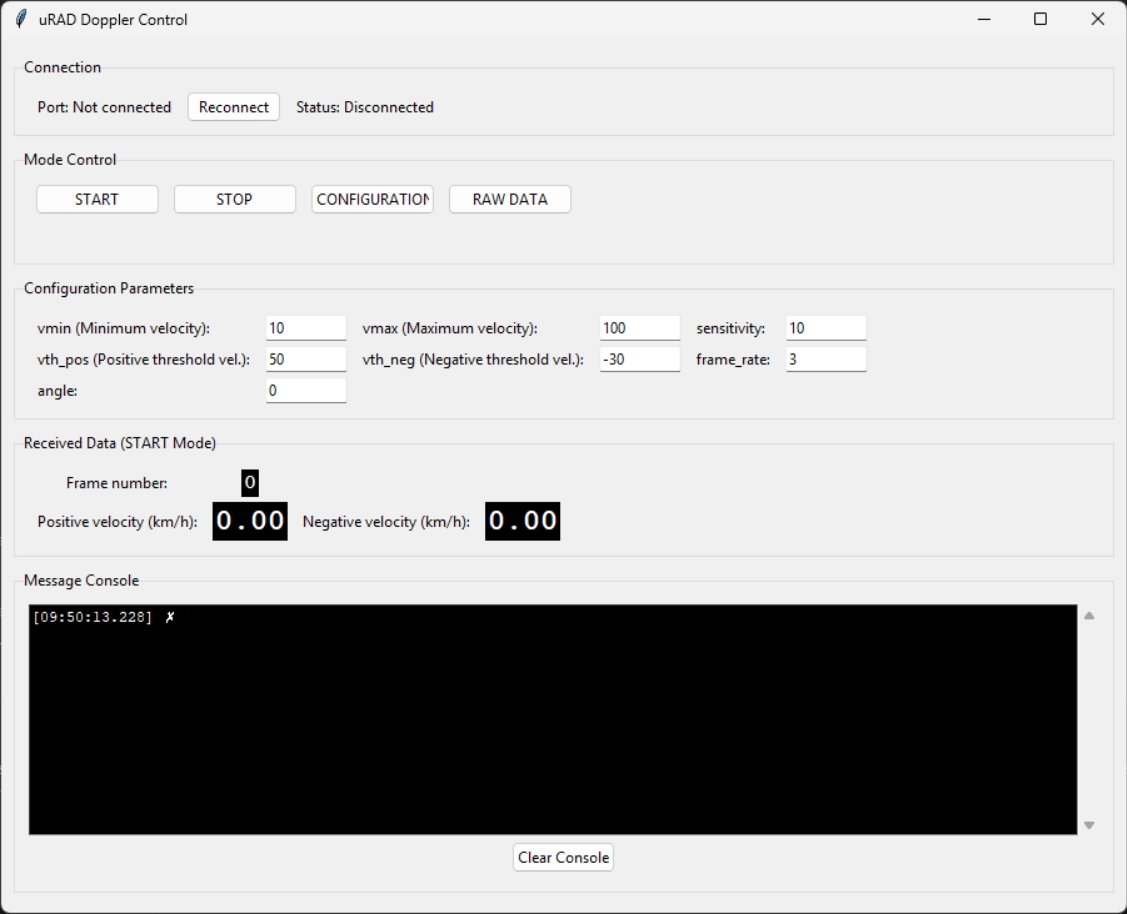
An open-source Python SDK and graphical user interface are included, allowing you to operate and evaluate the device without writing any code.

  • Python SDK included
  • Graphical user interface for evaluation
  • START and RAW mode control
  • CSV data export
  • Documented UART protocol at 921,600 baud
07 Specifications

Technical specifications of the uRAD Doppler sensor.

RF, mechanical and electrical parameters taken from the uRAD Doppler v1.0 datasheet.

Specifications · uRAD Doppler v1.0
RF frequency24.005 – 24.245 GHz (ISM)
Speed range±2 to ±90 m/s (322 km/h)
Accuracy±0.18 m/s (0.66 km/h)
Field of view30° × 30°
Refresh rate20, 10, or 4 samples/s
Power supply3.5 to 6 V DC
Power consumption137 mA / 0.7 W
CommunicationUART 0–3.3 V · 921600 bps
Temperature−20 °C to +85 °C
Certificado CE y RoHS
CE and RoHS marked productDesigned by Anteral S.L. with quality control on every unit.
Getting started

What you need to get started.

To test it from a computer, you need the uRAD Doppler module, a JST cable, a USB-UART adapter and a suitable power supply. The module includes documentation, GUI and SDK, but not the physical connection accessories.

Sensor uRAD Doppler JST cable + UART / USB PC · GUI / SDK
01
ConnectConnect the module via UART (0–3.3 V TX/RX) to your PC or microcontroller.
02
EvaluateRead speed and direction in real time with the GUI, without programming.
03
ExportSave data to CSV or work with RAW I/Q signals.
04
IntegrateBring the sensor into your system with the Python SDK and GPIO outputs.
Professional purchase

uRAD Doppler module only

For integrators and engineering teams that already have electronics, cabling and adapters. You receive the module with documentation, GUI and SDK.

Recommended if you already integrate hardware
First tests

uRAD Doppler starter kit

Module + JST cable + USB-UART adapter + quick start guide. Designed for labs, universities and first integrations that want to measure from day one.

Recommended for your first integration

Important points before integration

  • Actual range depends on target size, orientation, installation and environment.
  • PC testing requires a USB-UART adapter.
  • It is an integration module, not a complete radar with enclosure or display.
  • Requires external power supply (3.5–6 V DC) and proper connection.
08 Why uRAD

Radar sensors designed for integration.

We design and manufacture compact radar sensors for applications where non-contact measurement, easy integration and access to reliable data are critical.
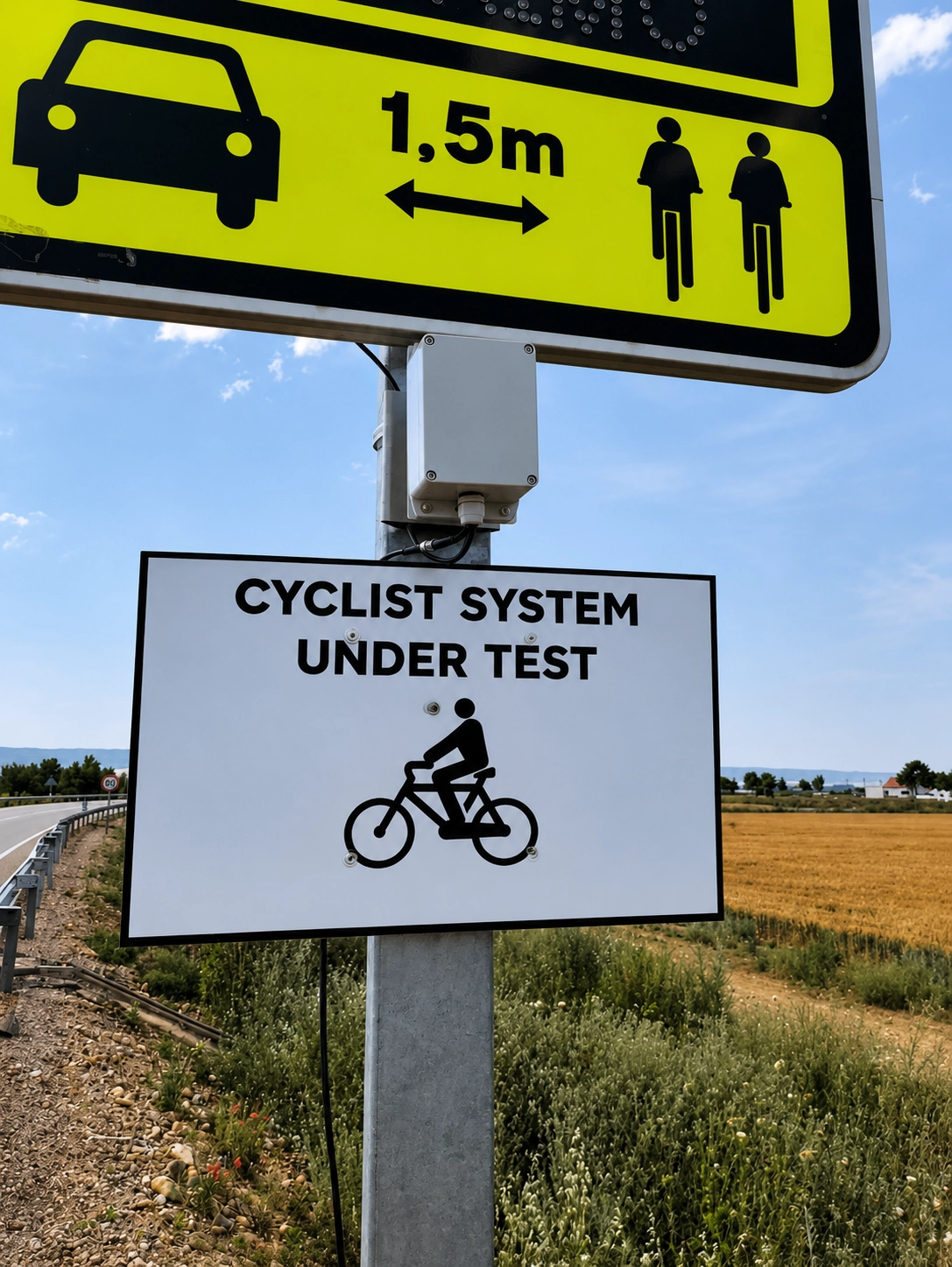
01Designed by Anteral, specialists in microwave radar technology.
02CE and RoHS marking with quality control on every unit.
03In-house technical documentation and engineering support before and after purchase.
04Professional purchase: business invoice, in stock and shipping in 24–72 h.
Sensor radar uRAD en aplicación real
RELATED SOLUTIONS

Related Solutions

uRAD Smart Radar Sensor detectando objetos en movimiento
SMART RADAR SOLUTION

uRAD Smart Radar Sensor

A ready-to-integrate smart radar solution for projects that need more than a standard Doppler radar module—advanced signal processing and complete deployment-ready capabilities.

View solution
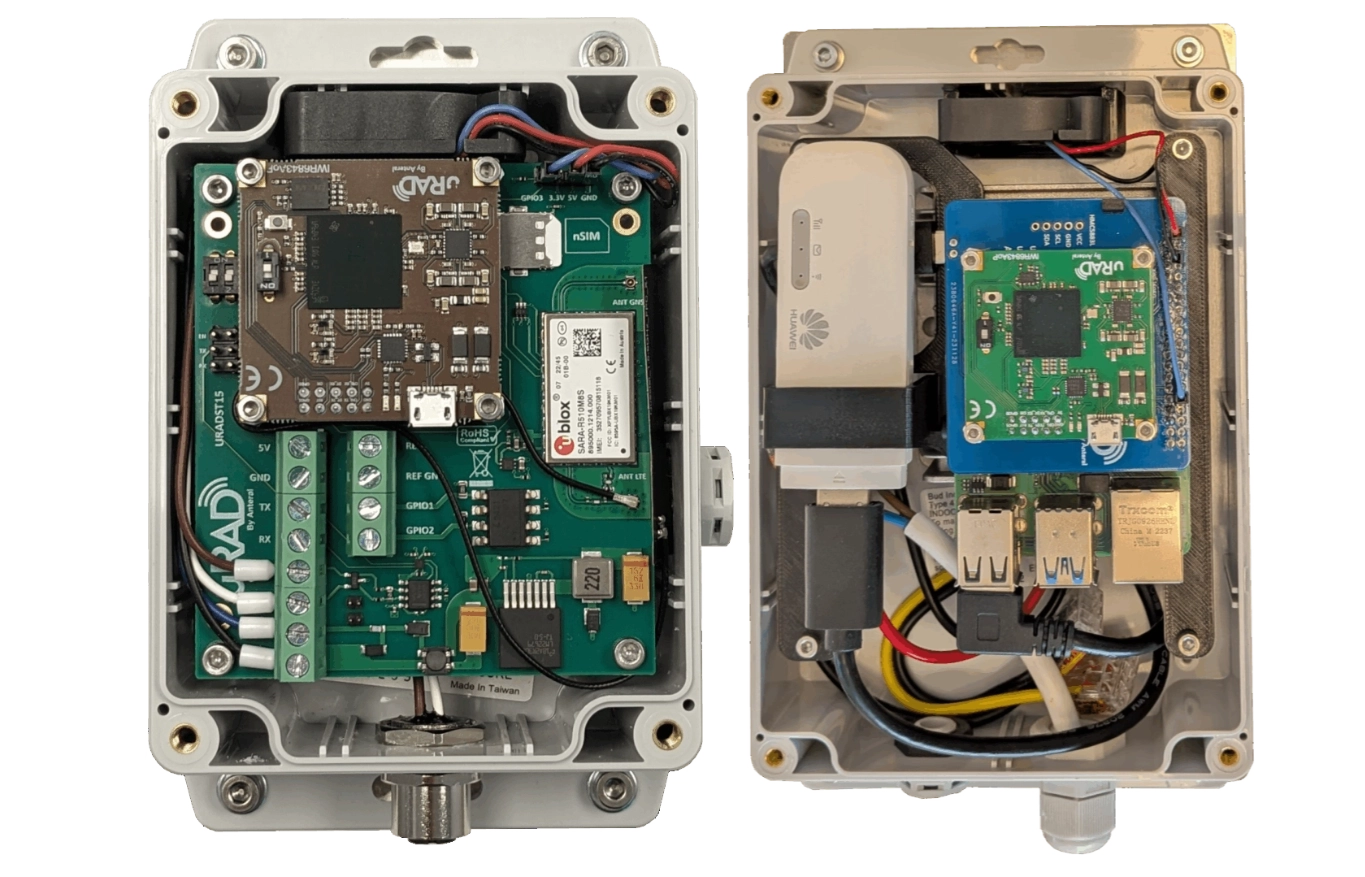
uRAD Smart Traffic Solutions para control de tráfico
TURNKEY TRAFFIC SOLUTION

uRAD Smart Traffic Solutions

A turnkey solution for traffic monitoring, driver feedback radar signs and smart city applications. It measures vehicle speed and can be deployed without additional development.

View solution
09 Frequently asked questions

Frequently asked questions about the Doppler radar sensor.

It is an integration module: a radar board that is ready to connect and evaluate, designed to be integrated into your own system. It includes documentation, a GUI, and an SDK, but it is not a complete radar system with an enclosure or display.
The uRAD Doppler module, a JST cable, a USB-UART adapter and a suitable power supply (3.5–6 V DC). With that, you can read data from the GUI on your PC.
Yes. It communicates via 0–3.3 V UART, compatible with Raspberry Pi, ESP32 and microcontrollers with 3.3 V UART. For 5 V Arduino boards, use a logic-level converter.
Yes. It communicates via 0–3.3 V UART with a documented serial protocol and includes a Python SDK, so you can connect it to a PC via UART/USB adapter, microcontrollers or embedded systems.
For basic tests, no: the included graphical interface (GUI) lets you operate the sensor and export data without programming. For advanced integration, you can use the Python SDK and UART data.
Speed and motion without contact using 24 GHz continuous-wave (CW) Doppler radar. It provides the speed of approaching and moving-away targets, and detects presence and movement direction.
It measures from 8 km/h to 322 km/h (±2 m/s to ±90 m/s) with ±0.18 m/s (0.66 km/h) accuracy. Range reaches up to 170 m for vehicles, depending on installation.
Yes. With up to 170 m range and two threshold-configurable GPIO outputs, it can directly trigger lights or speed feedback signs when a given speed is exceeded.
Yes. RAW DATA mode lets you extract In-phase (I) and Quadrature (Q) components through the serial port, ideal for advanced signal processing, vibration analysis or micro-displacement measurement.
It operates from 3.5 to 6 V DC (5 V DC recommended), with 137 mA / 0.7 W consumption. Connection is made through the 7-pin JST B7B-XH-A connector.
Añadido al carritouRAD Doppler × 1